


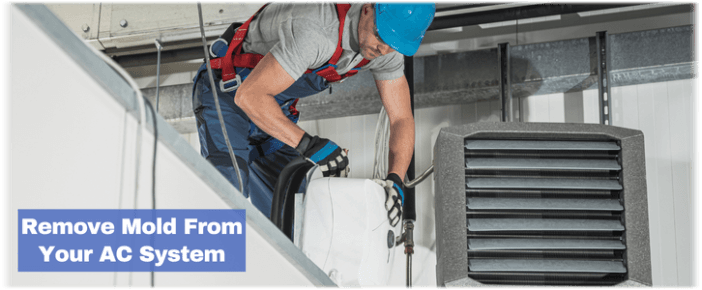
When moisture affects heating or cooling components, HVAC mold removal in Lancaster can help address visible contamination before it spreads further. Mold may develop around damp coils, drain areas, vents, or other HVAC surfaces. Therefore, professional evaluation matters when homeowners notice musty odors or suspicious growth. Our service focuses on careful removal, clear communication, and cleaner HVAC conditions.
Professional HVAC Mold Removal in Lancaster
Mold needs moisture and organic material to grow. Unfortunately, HVAC systems can sometimes create suitable conditions when condensation remains around certain components.
Our HVAC mold removal process starts with a careful inspection of accessible areas. First, we identify visible contamination and possible moisture sources. Then, we determine which components require cleaning. Finally, we remove affected material using appropriate methods and explain our findings.
Lancaster experiences long, hot summers and frequent air conditioner use. As a result, cooling systems often produce condensation for extended periods. Regular attention to moisture-prone areas can therefore help reduce conditions that support mold growth.
Common Signs Around Your System
Musty odors often provide the first warning of a moisture-related problem. For example, homeowners may notice an unusual smell when the air conditioner starts.
Visible spotting around vents or accessible HVAC components can also justify closer inspection. Additionally, persistent moisture near cooling equipment may create conditions that allow growth to return.
Professional air conditioner mold removal targets contaminated areas around cooling components when visible growth exists. Likewise, HVAC mold cleaning can address affected surfaces without treating the entire system unnecessarily.
When to Consider HVAC Mold Removal in Lancaster
Homeowners should investigate recurring odors, visible growth, or excessive moisture around HVAC equipment. However, dark discoloration does not always indicate mold. A careful assessment can help determine the appropriate next step.
Homes around Downtown Lancaster, West Lancaster, and areas near Antelope Valley College experience heavy seasonal cooling demand. Properties throughout ZIP codes 93534, 93535, and 93536 can also collect significant dust.
Dust combined with lingering moisture may create dirtier HVAC surfaces. Therefore, keeping the system clean and addressing moisture problems can support better overall maintenance.
Mold Removal for Air Ducts and HVAC Components
Mold-related concerns can appear in different parts of a ventilation system. For instance, homeowners may discover contamination around vents, coils, drain pans, or accessible duct surfaces.
Air duct mold removal focuses specifically on confirmed growth inside accessible ductwork. Meanwhile, AC mold removal addresses affected cooling-system areas. A targeted approach prevents unnecessary cleaning of components that show no problem.
Related services can also address separate airflow and maintenance concerns. Air duct cleaning removes accumulated dust and debris from ductwork. Additionally, ductwork inspection can reveal visible damage or contamination. AC coil cleaning targets dirty cooling coils, while dryer vent cleaning removes lint from the dryer exhaust system.
Trusted Experts for Lancaster HVAC Mold Removal
Every mold situation deserves careful attention rather than assumptions. Therefore, we inspect accessible areas and explain what we can verify. We also avoid recommending unnecessary services.
Our goal is to address visible contamination while helping homeowners understand possible contributing conditions. Moreover, identifying moisture sources can reduce the chance of repeated buildup.
Frequently Asked Questions
What causes mold to develop around HVAC components?
Moisture, condensation, dust, and limited drying can create favorable conditions. Therefore, controlling moisture plays an important role in preventing recurring growth.
Can mold develop inside residential air ducts?
Yes, confirmed mold can develop where moisture reaches contaminated duct surfaces. However, professional inspection should verify the problem before treatment begins.
Why should Lancaster homeowners address HVAC mold quickly?
Ongoing moisture can allow contamination to spread across affected components. Professional HVAC mold removal in Lancaster helps address visible growth and identify contributing conditions.
Call (661) 271-3404 today to address suspicious growth before moisture creates a larger problem and schedule professional HVAC mold removal in Lancaster.